Why HELP Exists
We firmly believe, based on our experience, that education is the most effective way to break barriers, yet access to quality education remains a challenge and a privilege for many.
We were born out of real needs in some of the most vulnerable and far-flung communities that we are part of or we know deeply. In the remote hills and rural municipalities of Nepal, education continues to be both a hope and a hardship. While the right to education is constitutionally guaranteed, the reality on the ground is marked by under-resourced schools, untrained teachers, and communities grappling with poverty, migration, and systemic neglect. For children in these regions, especially those from marginalized and economically disadvantaged families, the classroom often represents not a place of opportunity but of unmet potential.
Helambu Education and Livelihood Partnership (HELP) was founded in response to these very disparities. What began as a local initiative, born from the urgent recognition that rural school buildings were deteriorating, teachers were absent, and students were being left without basic resources, has grown into a committed movement to bridge the gap between policy and practice, rights and realities.
We are working to solve a deeply rooted problem: the lack of equitable access to quality education in Nepal’s rural communities. The challenges are complex and interconnected. Poor infrastructure, shortage of qualified teachers, weak early learning foundations, and economic hardship at home all contribute to a cycle of educational underachievement. In many cases, the absence of even the most basic resources, like a desk to sit on, a book to read, or a bag of school supplies, can be the difference between a child staying in school or dropping out.
HELP’s approach is student-centric and community-rooted. We are not just addressing isolated needs. We are transforming the educational ecosystem. Whether through our Saathi Teachers Programme that embeds trained teachers into rural classrooms, our scholarship and mentorship initiatives that open pathways to higher education, or livelihood support through greenhouse farming, we are digging deep to tackle the structural barriers that hold communities back.
We believe that meaningful, lasting change happens not when solutions are brought from outside, but when communities are empowered from within. Our work is about restoring dignity to education, rebuilding trust in public systems, and reimagining what’s possible for the next generation of rural Nepali children.
Our Vision and Mission
Vision
A Nepal where every child and community are empowered through quality education and sustainable livelihood opportunities.
Mission
To empower children and local communities to access quality education and sustainable livelihood opportunities through collaboration with national and international partners.
Sectoral Understanding
Education lies at the heart of all development. For communities to truly thrive, education must go hand in hand with economic opportunity and sustainable livelihoods. Many children and young people in remote areas remain vulnerable, yet even small, thoughtful support can create hope and open life-changing possibilities.
While the government plays a vital role, it cannot address every gap. Civil society organisations, therefore, hold a powerful responsibility to stand alongside communities and ensure that voices are heard, needs are recognised, and meaningful solutions are brought to life.
HELP is a locally rooted organisation committed to listening deeply, responding compassionately, and acting purposefully. We strive to address both immediate needs and long-term sustainability, ensuring that our actions are grounded in community realities.
As an NGO, it is our duty to be clear about what we do, why we do it, how we do it, and where we do it—guided by integrity, accountability, and learning.At the broader sector level, many NGOs continue to rely heavily on externally driven agendas, short-term aid priorities, and projects defined outside local realities. This weakens credibility and limits genuine community-centered impact. There is a growing need for locally rooted organisations that lead confidently from the Global South perspective, grounded in community voice, dignity, and lived experience.
Partnership and collaboration are central to HELP’s strength. By working closely with communities, government stakeholders, and partners, we gain knowledge, build trust, and align our sincere efforts toward meaningful and lasting impact.
Why in Education
Although school enrollment rates in Nepal may appear high, access to meaningful, equitable, and high-quality education remains deeply challenging for many children in remote communities. Economic hardship, cultural constraints, and social vulnerability place children and young people at significant risk of dropout, limiting their opportunities for learning and future livelihoods.
Many community schools continue to struggle with poor learning environments and inadequate infrastructure. This affects children’s dignity, self-confidence, and motivation to remain in school. Students also have very limited exposure to broader learning opportunities, life skills, and aspirational experiences that can help them imagine and build better futures.
A serious shortage of trained, motivated, and qualified teachers—particularly at the primary level—further weakens learning outcomes. Teaching practices often remain traditional, teacher-centered, and disconnected from children’s needs, largely due to limited professional development, lack of support systems, and insufficient capacity-building opportunities.
As a result, learning achievement in community schools remains low, especially in foundational grades, where attitudes and understanding of teaching and learning are often misaligned with children’s developmental needs. Young people who do manage to reach higher education frequently struggle to complete it because of financial barriers, limited guidance, lack of information, and low motivation.
Meanwhile, a worrying trend is emerging where many young people are losing interest and confidence in education, even though quality education remains essential for opportunity, dignity, and sustainable development. HELP exists in response to these realities—to stand with children, youth, schools, and communities; to strengthen educational systems and learning environments; and to ensure that education leads to real opportunity, pride, and hope.
Problem Statement
Children and young people in remote communities lack access to quality, and dignified meaningful education, are at risk of dropout, and face limited pathways to higher education and livelihoods due to poor learning environments, limited teacher capacity, socio-economic barriers, and weak local education support systems.
Values that Guide Us
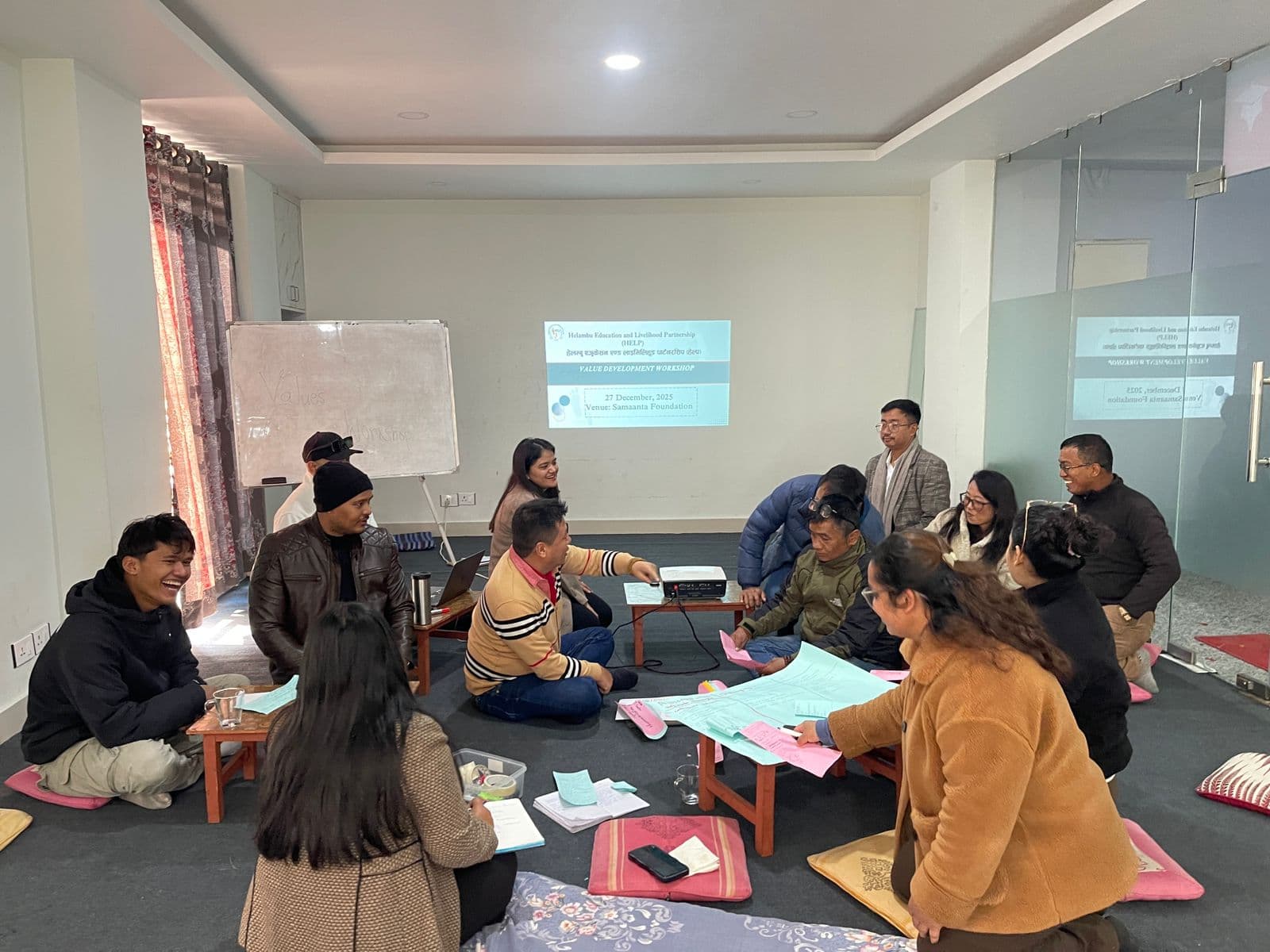
HELP’s core team came together for a workshop to revisit and redefine the organisation’s core values (27 December 2025).
Locally Rooted, Globally Connected:
We are grounded in our history, relationships, and community trust. Our work is shaped by lived experience and guided by past lessons, while collaborating with national and international partners to bring innovation and broader perspectives.
Commitment to Education and Empowerment:
We connect people, partners, and resources to invest in young people’s education, confidence, skills, and leadership—supporting communities to build a future with dignity and opportunity.
Putting the Last First
We prioritise children, girls, marginalised youth, and vulnerable communities, ensuring their voices, needs, and lived experiences guide every programme and decision.
Leading with Empathy:
We listen deeply and care genuinely, making thoughtful, evidence-based decisions that balance empathy with responsibility.
Resilience Through Challenges:
We stand with our communities during crises and change, responding with integrity while turning challenges into opportunities for growth and hope.
Consistency for Lasting Impact:
We believe meaningful change takes time. Long-term presence and sustained effort are central to achieving lasting outcomes.
Partnership for Sustainability:
We work closely with communities, institutions, and partners to deliver solutions that are relevant, respectful, and sustainable.
Purpose-Driven Action:
Every programme is guided by clear purpose and real community needs—never by trends, convenience, or obligation.
Mutual Respect and Shared Responsibility:
We ensure inclusive decision-making by collaborating with communities, youth, educators, governments, and partners for shared ownership and success.
Integrity and Accountability:
We act with honesty, transparency, and ethical responsibility, honouring the trust placed in us.
Value for Money:
We design cost-effective, locally aligned programmes that respect local economies and ensure sustainable use of resources.
Alignment with National Priorities & SDGs
In line with Nepal’s National Education Priorities (Nepal, by 2030), our work contributes to:
- Ensure all children complete free and quality primary and secondary education
- Improve learning outcomes, particularly in English and Mathematics
- Increase scholarship coverage for disadvantaged students
HELP aligns its work with Sustainable Development Goal (SDG) 4: Quality Education, supporting inclusive, equitable, and lifelong learning opportunities for all. On the broader SDG linkages, HELP works in partnership with local communities, government bodies, and national and international organizations to strengthen education delivery, aligning with SDG 17. HELP translates global and national commitments into community-level action, making quality education accessible to marginalized and remote communities across Nepal.